AC Not Cooling? What to Check Before You Call
Before you call for AC repair, there are a few checks any homeowner can safely run — no tools, no risk to the system, and one of them is the actual problem more often than you'd think. Here's what to check, in order, on a hot Napa day.
- 5 minutes, no tools
- Safe for any homeowner
- Know when to stop and call
Start here: the checks that are actually safe to do yourself
1. Thermostat set correctly
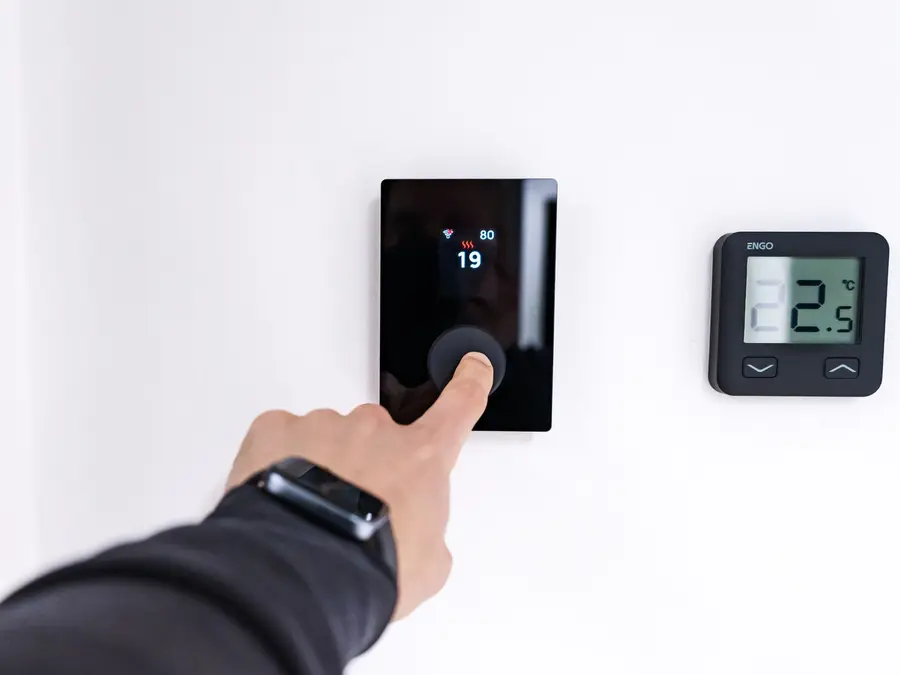
Confirm it's set to Cool, not Fan or Off, and that the set temperature is at least a couple degrees below the current room temperature. A thermostat bumped into Heat or Off — easy to do by accident, especially with kids or guests in the house — looks exactly like a dead AC.
2. Breaker tripped
Find your AC's breaker in the electrical panel — it may be labeled "AC," "condenser," or "HVAC." If it's flipped to the middle or Off position, reset it once. If it trips again right away, stop — don't keep resetting it. A breaker that won't hold is telling you something's actually wrong, and that's a call-a-pro situation, not a DIY one.
3. Air filter clogged
A filter packed with dust and pollen restricts airflow enough that vents can blow noticeably warmer air even though the system is running fine otherwise. Pull the filter and hold it up to a light — if you can't see light through it, replace it. Worth checking every 60–90 days regardless.
4. Vents closed or blocked
Furniture, rugs, or registers someone closed last winter can restrict airflow to a room enough to mimic a bigger problem. Walk the house and confirm supply vents are open and unobstructed, especially in rooms that feel warmer than the rest of the house.
What none of this fixes — and why that's normal
If you've run all four checks and the system still isn't cooling, the cause is almost always something that requires a licensed technician: a low refrigerant charge (usually a sign of a leak, not normal use), a failing capacitor or contactor, a compressor that isn't starting, or a frozen evaporator coil. None of those are homeowner-safe to open up or diagnose — refrigerant work specifically requires EPA certification, and electrical components inside the unit can hold a charge even when the power's off. Getting this far and ruling out the simple stuff actually helps: it tells the tech who shows up that the issue is real, not a thermostat setting, which can speed up the visit.
Signs it's more than a simple fix
Ice on the coil or lines
If you see frost or ice on the indoor coil or the refrigerant lines, turn the whole system off at the thermostat — not just fan mode — and let it thaw before a tech arrives. Running it iced over can damage the compressor.
Warm air even on Cool
Air moving but not cold, with the thermostat confirmed correct, points to a refrigerant issue or a compressor that isn't engaging — both licensed-tech territory.
Short cycling
A system turning on and off every few minutes instead of running a normal cycle is often an electrical or airflow issue, and it's hard on the compressor the longer it continues.
Why Napa's summer heat makes small issues feel urgent fast
An AC that's marginally struggling can coast through a mild stretch and then fail outright the moment a real heat wave hits — which in Napa County usually means a run of 95–100+ degree days in July and August. South- and west-facing homes around St. Helena and Calistoga take more direct afternoon sun and put extra load on a system that's already working at its limit, so a unit that's borderline in June can be the one that quits on the hottest day in August. That's exactly why checking the simple stuff at the first sign of trouble — rather than waiting to see if it gets better — tends to matter more here than in a milder climate.
What a repair visit typically involves
We won't invent a number — pricing depends on the cause and your system. What's worth knowing going in: a technician will typically start by confirming airflow and electrical readings, then move to refrigerant pressures if those check out, and give you a written diagnosis and quote before doing any repair. If the fix turns out to be something more involved, like a compressor replacement, that's a separate conversation with real numbers, not a surprise on the invoice.
How this works: We're a free referral resource, not a contractor. A local HVAC contractor diagnoses and repairs the system, and you hire and pay them directly. Reaching out costs nothing — one call gets you connected.
Frequently asked questions
Why is my AC running but blowing warm air?
After confirming the thermostat and filter are fine, warm airflow usually points to a refrigerant or compressor issue — both require a licensed technician to diagnose safely.
Is it safe to keep running my AC if it's not cooling?
Running it for a short time while you troubleshoot is fine. If you see ice on the coil or lines, or the system is short cycling, turn it off at the thermostat until a tech looks at it — continuing to run it can turn a repair into a bigger one.
How do I know if my AC just needs a filter change?
Pull the filter and check it against a light source. If it's visibly caked with dust or you can't see light through it, replace it and give the system 15–20 minutes to see if airflow improves before assuming it's something bigger.
What if resetting the breaker doesn't fix it, or it trips again?
Reset it once. If it trips again immediately, stop resetting it — a breaker that won't hold usually means an electrical issue in the system itself, and that's a job for a licensed technician.
How much does it cost to get someone out to look at it?
It varies by contractor. A local HVAC contractor will quote the diagnostic visit and any repair in writing before work starts — nothing is invented or assumed upfront.